


PVC Foam Board
Yinhao Import&Export:Your Professional PVC Foam Board Manufacturer!
Yinhao Import & Export Co., Ltd. began producing plywood in 2007. After 18 years of development, the company now operates three factories: a plywood plant, a new materials plant, and a veneer plant. The company covers 36,000 square meters, employs 86 people, and has an annual production capacity of 60,000 cubic meters.



Why Choose Us
Quality Assurance
The company strictly adheres to industry quality system standards and specifications, using industry-leading testing equipment to ensure product quality and maintain a strong reputation.
Affordable Prices
We have a professional procurement and cost accounting team dedicated to reducing costs and maximizing value, allowing us to offer you competitive prices.
Professional Service
Yinhao has three sales teams and two inspection teams providing 24/7 service. If you encounter any issues with our products, we will respond quickly and offer full support.
OEM/ODM Services
When you request a solution, our engineers will provide a faster and more complete customized plan. We offer a wide range of products and technical support tailored to your specific needs, ensuring you select the right product.
Specification
|
Product Name |
PVC Foam Board |
|
Material |
PVC material |
|
Density |
0.32-1.0g/cm3 |
|
Thickness |
3-50mm |
|
Color |
White/Black/Custom |
|
Size |
1220*2440mm or custom sizes |
|
Finished |
Glossy & matte |
|
Suitable Temperature |
-50~70℃ |
|
Bending Strength |
45.6mpa |
Advantages of PVC Foam Board
Strong and Durable: PVC foam boards are extremely strong due to their molecular structure, ensuring that they don’t deform. The boards can last decades without damage.
Water Resistant: PVC foam boards have strong water resistance and will not expand or change their makeup when in contact with moisture.
Fire Resistant: PVC foam boards are fire resistant and can be used anyplace. Acid, heat, or light do not affect it.
Corrosion Resistant: PVC doesn’t react when exposed to chemicals. This preserves its condition and protects it from any distortion.
Low Maintenance: PVC Foam Board Sheet requires minimal maintenance, making it a convenient and cost-effective choice for various applications.
Excellent Printability: PVC Foam Board offers excellent printability, allowing for vibrant and high-quality printing, making it ideal for signage and display applications.
Ease of Fabrication: PVC foam boards can be easily cut, routed, drilled, glued, and thermoformed using standard tools, allowing for fast and cost-effective customization in both industrial and DIY contexts.
Thermal and Acoustic Insulation: Thanks to its closed-cell structure, PVC foam offers effective thermal insulation and sound-dampening properties—beneficial in building insulation and noise control applications.
Lightweight: PVC foam boards are lightweight, making vinyl fence panels easy to handle and install. The reduced weight also means less strain on the fence posts and foundations, which can contribute to the overall stability of the fence.
Signage and Advertising
PVC foam board is widely used in the signage and advertising industry. Its smooth surface is ideal for high-quality printing, and its durability ensures that signs remain vibrant and intact in various weather conditions.
Building and Construction
In the construction industry, PVC foam board is used for cladding, insulation, and decorative panels. Its lightweight nature and resistance to moisture make it suitable for both interior and exterior applications.
Exhibition and Display
Exhibition designers prefer PVC foam board for creating lightweight and portable display stands, booths, and backdrops. Its ease of customization allows for creative and eye-catching designs.
Furniture Manufacturing
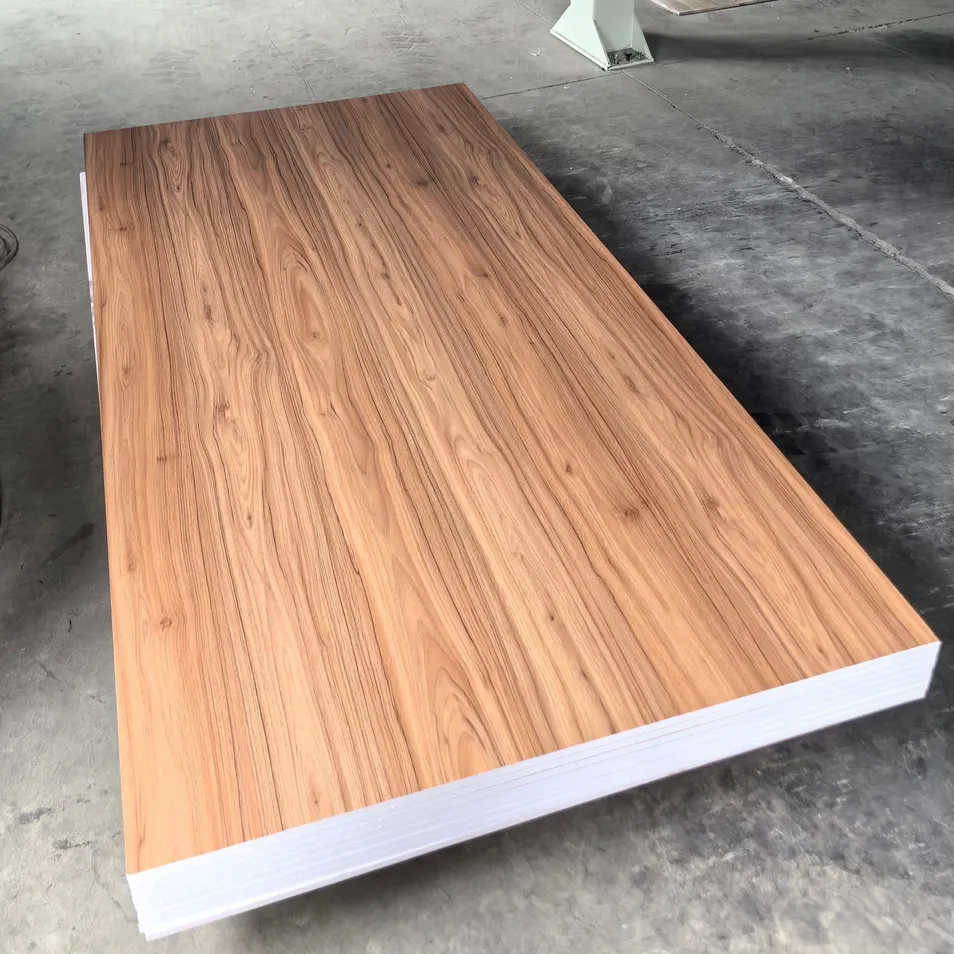
PVC foam board is also used in furniture manufacturing due to its durability and versatility. It can be used to create lightweight, moisture-resistant, and aesthetically pleasing furniture pieces.
Marine and Automotive
In the marine and automotive industries, PVC foam board is used for interior and exterior applications. Its resistance to water and chemicals makes it an ideal material for these demanding environments.
CNC machining Manufactruing process
PVC Free Foam Board
PVC free foam board is made without polyvinyl chloride. Instead, it utilizes polypropylene or a blend of polypropylene and polyethylene. PVC free boards are ideal for projects where chemical leaching is a concern. They provide similar strength and durability as traditional PVC materials.
PVC Celuka Foam Board
Celuka foam boards have a closed-cell structure created through an extrusion process. This results in a lightweight board with enhanced thermal insulation properties. PVC Celuka boards are exceptionally smooth and consistent. They work well for signage, model building, and crafts.


PVC Co-Extrusion Foam Board
Co-extrusion foam boards consist of a closed-cell PVC foam core bonded between two layers of plastic coating. The coating improves surface finish while the foam center provides strength. These boards offer weather and moisture resistance. Common uses include exterior signage and marine/boat building.
PVC Laminated Foam Board
Laminated PVC foam boards have a layer of plastic film or paper laminate adhered to one or both sides. The lamination creates a more durable surface and allows for printing. PVC laminated boards see heavy use for visual communications and retail displays.
Process of PVC Foam Board
Material Mixing
The first step of the process is to mix the PVC resin and the foaming agent. The specific ratio of the two depends on the desired foam board thickness and density. A high-speed mixer or blender is usually used to mix the materials evenly.
Extrusion
After the materials are mixed, they are fed into an extruder. An extruder is a machine that squeezes the mixture through a die to form the desired shape and thickness. The extruder applies heat and pressure to the material, causing it to expand and form tiny bubbles, which give the foam board its unique texture.
Cooling and Cutting
After the foam board is extruded, it is cooled with water or air to fix the shape and density. A saw or other cutting tool is then used to cut the board into the desired size and shape.
Finishing
Finally, the foam board is sanded and polished to create a finished product that can be used for a variety of purposes. Depending on the intended use of the board, it can be coated or otherwise treated to enhance its durability and lifespan.
Packaging and Shipping

FAQ