


Commercial Plywood
Yinhao Import&Export:Your Professional Commercial Plywood Manufacturer!
Yinhao Import & Export Co., Ltd. began producing plywood in 2007. After 18 years of development, the company now operates three factories: a plywood plant, a new materials plant, and a veneer plant. The company covers 36,000 square meters, employs 86 people, and has an annual production capacity of 60,000 cubic meters.


Why Choose Us
Quality Assurance
The company strictly adheres to industry quality system standards and specifications, using industry-leading testing equipment to ensure product quality and maintain a strong reputation.
Affordable Prices
We have a professional procurement and cost accounting team dedicated to reducing costs and maximizing value, allowing us to offer you competitive prices.
Professional Service
Yinhao has three sales teams and two inspection teams providing 24/7 service. If you encounter any issues with our products, we will respond quickly and offer full support.
OEM/ODM Services
When you request a solution, our engineers will provide a faster and more complete customized plan. We offer a wide range of products and technical support tailored to your specific needs, ensuring you select the right product.
Product Specifications
|
Standard size |
1220*2440mm |
|
Thickness |
2.5mm-30mm |
|
Fance&Back |
Okoume,Bintangor, Pencil Cedar,Birch,Pine etc |
|
Glue |
MR,WBP |
|
Grade |
BB/BB,BB/CC,C/D |
|
Density |
530kg/m3-650kg/m3 |
|
Water absorption rate |
≤10% |
|
Modulus of elasticity |
>3700Mpa |
|
Species |
Poplar, Pine, Combi,Hardwood and Combi etc. |
|
Surface Treatment |
Well sanded & pressed |
Advantages of Commercial Plywood
Widely used
Commercial plywood has a multipurpose use & provides an affordable construction material for indoor structure. This plywood is ideally suited for cabinets in bathrooms and restrooms. Alternatively, it can be a cost-efficient option for furniture.
Looks wonderful
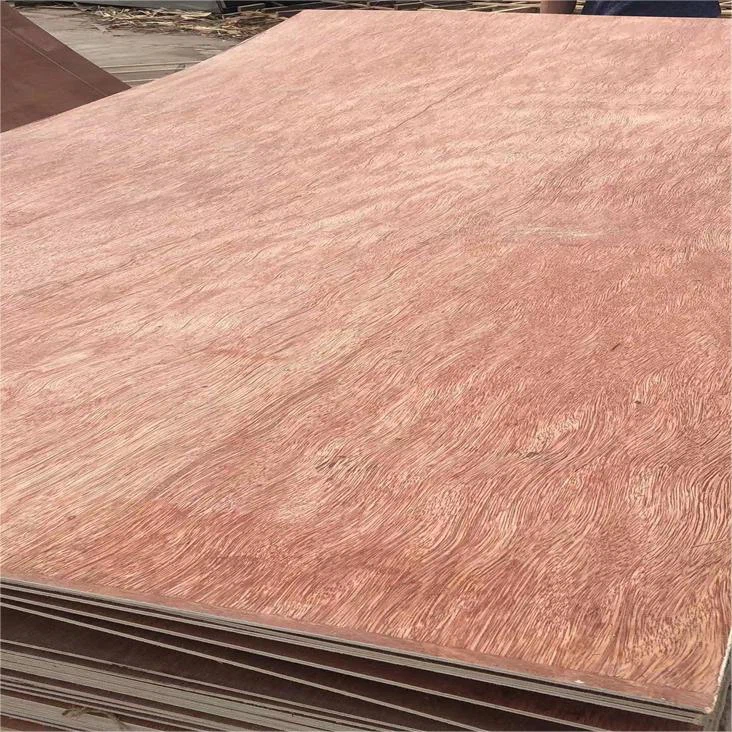
Commercial plywood gives a great outer look to your furniture. This plywood board is generally covered with solid wood, because of which it looks just as amazing as real wood. If a good quality veneer is used, it will add to the beauty of the plywood.
Durability
Commercial plywood has an even resistance along grains regardless of direction. This, as well as the use of good veneers and glues, makes this plywood super good at withstanding sharp blows and all kinds of in-service mishandling, therefore making it a very durable, engineered wood product.
Light in weight
Despite its solidity, commercial plywood is so much lighter compared to solid wood, making it even a better choice for furniture-making. On the other hand, using heavier solid wood can prove to be rather unmanageable when designing furniture or when used for other commercial purposes.
Best for Curved Surface
Creating curved surfaces with solid wood is challenging because the outcomes are frequently rough and uneven. But don’t you worry! Commercial plywood can be handily applied to a curved surface without any inconvenience, making it the perfect choice of material that can be used on a curved surface.
Applications Of Commercial Plywood
Furniture
The most common applications for this plywood are large and designer furniture. You can make chairs, dining tables, cupboards, bedside tables, and so on with it. Commercial plywood’s great tensile strength allows it to be easily molded into any furniture design for your living room or bedroom.
Wall Panelling And Partitions
Commercial plywood can be an economical choice for wall paneling, false ceilings, and partition walls. Interior-grade commercial plywood can add ornamental value to your wall panels in both home and commercial settings. You can also paint or laminate its smooth surface to fit the decor easily.
Ceiling And Flooring
Commercial plywood is often used in roofing/ceiling and flooring applications for durability and moisture resistance. It is used as a base layer in flooring and as sheathing on some roofs.
Door And Window Manufacturing
Commercial plywood is known for its strong insulation capabilities. Its dimensional stability makes it ideal for making robust doors and windows. It is also widely used to manufacture interior doors and window frames.
Kitchen Cabinets And Shelves
Cabinets in kitchens and bathrooms are built with commercial plywood. The shelves must support the weight of big things, which is where commercial plywood comes in handy.
Industrial and Commercial Projects
Exterior-grade commercial plywood is often used for shuttering in concrete formwork construction. Its strength and resistance to moisture and warping make it ideal for high-traffic environments such as offices, retail spaces, warehouses, and factories.
Storage Units
Commercial plywood can make a perfect storage room, warehouse shelving, garages, and closets. It is commonly used for constructing sturdy shelving, partitions, and storage racks. Also, it can ensure long-lasting support for heavy loads.
Architectural Molding And Trim Work
Commercial plywood is an excellent choice for molding and trim work for flexibility. You can use it for baseboards, crown molding, and other decorative elements.
Vehicle And Transport Applications
Commercial plywood is used to construct the interiors of vehicles like buses, trucks, and trailers. Its durability under various conditions makes it ideal for such applications. Also, its ability to withstand high moisture and temperature fluctuations adds to its longevity in transport settings.
Construction And Site Structures
Commercial plywood is used to create the base form for pouring concrete. It ensures that the material holds up to heavy loads and moisture during construction.
Art And Craft Projects
Artists and crafters frequently use commercial plywood to handle various painting, engraving, and sculpting techniques. It’s lightweight, easy to work with, and can be cut into intricate shapes and designs. Commercial plywood is also commonly used in DIY craft projects such as signboards, home decor pieces, and artistic installations. It provides a solid yet affordable canvas for creative work.
Acoustic And Soundproofing Applications
Commercial plywoods are dense enough to absorb sound. It is often applied in concert halls, theaters, recording studios, etc. You can also use it in residential spaces to control noise and enhance sound quality.
Process of Commercial Plywood


Timber Selection
The process begins with selecting suitable timber, typically from fast-growing species like poplar, pine, or eucalyptus.
Log Preparation
The selected logs are debarked and then cut into smaller sections, making them easier to handle during the peeling process. The logs are often soaked in hot water to soften the wood, making it easier to peel into thin veneers.
Veneer Peeling
The logs are fed into a rotary lathe, which peels them into thin layers or veneers. These veneers are then cut to the desired size, ready for the next stage of production.
Drying the Veneers
The freshly cut veneers contain a high moisture content, which needs to be reduced. The veneers are dried using a drying machine that circulates hot air to remove excess moisture, ensuring they have the right moisture level for bonding.
Adhesive Application
Once the veneers are dried, they are glued together using synthetic resins, typically urea-formaldehyde. The adhesive is applied evenly across the veneers to ensure a strong bond.
Laminating the Veneers
The glued veneers are stacked in layers, with each layer’s grain running perpendicular to the one below it. This cross-grain structure provides the plywood with its strength and resistance to warping.
Pressing
The stacked veneers are pressed under high pressure and temperature to bond them together firmly. This pressing process also ensures that the plywood sheets have a uniform thickness.
Cutting and Finishing
After pressing, the plywood sheets are trimmed to the desired size and sanded to create a smooth surface. The finished commercial plywood is then inspected for quality and prepared for distribution.
Commercial Plywood Maintenance Tips for Linger Lifespan
Sealing: Apply a high-quality sealant or finish to the plywood to create a protective barrier against moisture. Regularly inspect and reapply the sealant as needed.
Avoid Direct Contact with Water: Prevent plywood from coming into direct contact with water or excessive humidity, especially in areas prone to dampness.
Climate Control: Maintain a stable indoor climate with controlled temperature and humidity levels. Use dehumidifiers or air conditioners in areas prone to high humidity.
Storage Conditions: Store plywood in a dry, well-ventilated area away from direct sunlight and extreme temperatures.
Even Distribution: Ensure that loads are evenly distributed across the surface of the plywood to avoid localized stress.
Support: Use appropriate supports or reinforcements to distribute weight evenly and prevent sagging.
Lift Properly: When moving plywood, lift it carefully and avoid dragging or dropping it to prevent scratches and dents.
Edge Protection: Use edge protectors during transport and handling to prevent chipping and splintering.
Varnish or Lacquer: Apply a varnish or lacquer to protect the surface from scratches and stains while enhancing the natural grain.
Regular Maintenance: Reapply protective finishes as needed to maintain the plywood's appearance and durability.
Packaging and Shipping

FAQ